
What Kenyans Actually Eat for Breakfast
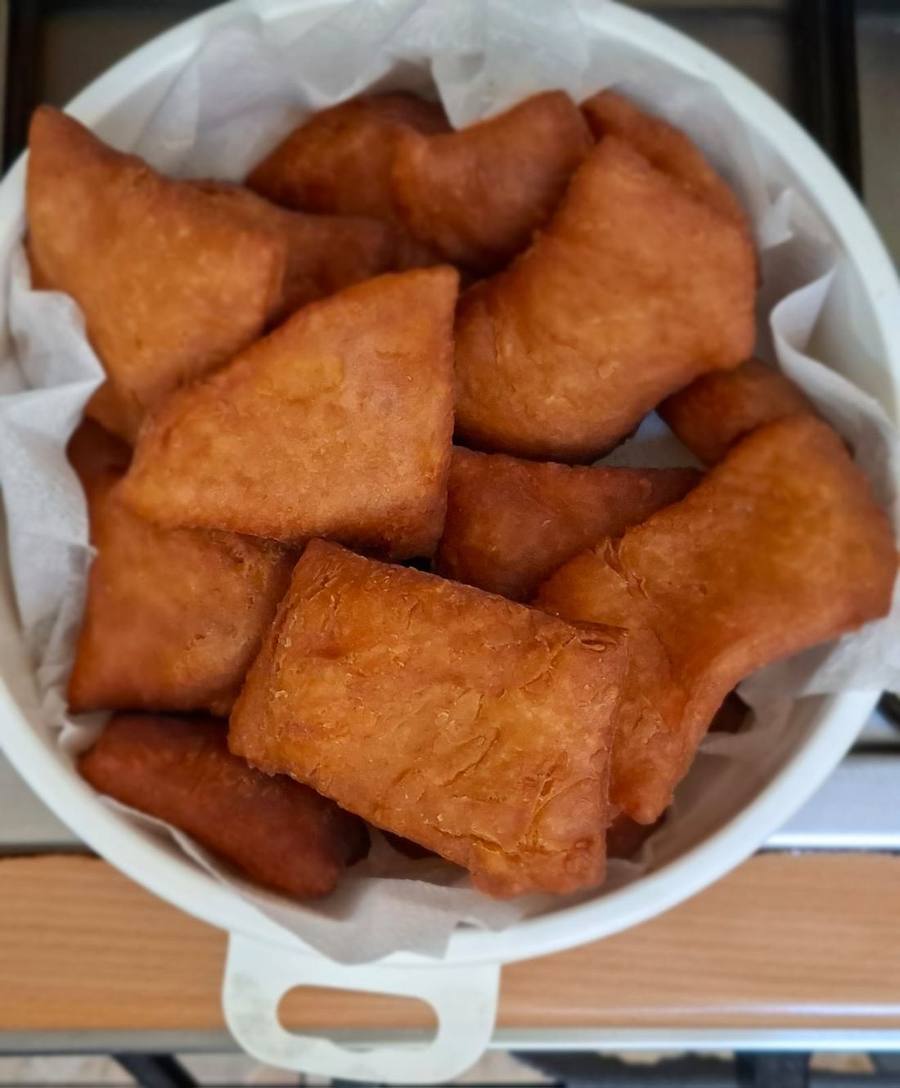
A Kenyan breakfast is tea and something to dip in it. The tea is chai — boiled with milk in one pot, sweet, often with ginger. The something is usually mandazi or mahamri, or a chapati left over from last night, or bread, or boiled sweet potato. It is a warm, simple, starchy start, and in Budapest it travels well into a grey morning.
What a Kenyan breakfast actually looks like
Forget cereal. It is a hot, milky cup and one starch; the rest varies by region, budget and how much was cooked last night. A typical table might hold:
- Chai — tea boiled with milk and sugar, frequently with ginger.
- Mandazi — lightly sweet fried dough, soft in the middle, made to be torn and dunked.
- Mahamri — the coastal cousin, made with coconut milk and cardamom.
- Chapati — yesterday's, warmed in a dry pan, eaten plain or with tea.
- Uji — a thin, slightly sour porridge of maize or millet flour, drunk from a cup.
- Viazi and nduma — boiled sweet potato and arrowroot, plain and filling.
- Eggs — fried or boiled, when there is time and appetite.
Choose one starch and one cup. That is breakfast.
Chai first, boiled not brewed
The single biggest difference from a Hungarian morning is the tea. Kenyan chai is not a teabag dropped into hot water with milk added after. Water, milk, tea leaves and sugar go into the same pot and are brought to a rolling boil together. The result is thicker, sweeter and much rounder than black tea, and it stains the cup.
Add crushed ginger and it becomes chai ya tangawizi, the version most households make when the weather turns. Ginger gives a clean burn at the back of the throat rather than chilli heat — useful in November in Budapest, when the damp comes off the Danube and stays for five months. There is a full account of it in Chai ya Tangawizi: Kenyan Ginger Tea, Boiled Not Brewed.
Kenyan chai is boiled, not brewed, with the milk in the pot from the start — that one sentence explains most of what surprises visitors about tea in Kenya.
Mandazi, mahamri and the dunking problem
Mandazi is East Africa's fried dough: a soft, faintly sweet triangle or square, crisp at the edges, still steaming when it is torn. It is not a doughnut with filling and glaze. The sweetness is low on purpose, because the tea is already sweet and the two are eaten together.
Mahamri is the coastal version, enriched with coconut milk and scented with cardamom, a little richer and more perfumed. Which one lands on your table used to be a question of geography, inland or coast; now it is what you feel like. The differences are set out in Mahamri or Mandazi: What Is the Difference?.
For anyone who has never had either: think of a good fánk, but less sweet and less airy, with a chew that holds up when you dip it.
A Kenyan morning in Budapest
The practical version here is a Sunday morning one. Mandazi and mahamri are best within a few hours of frying, so they are fried to order, and chapati reheats beautifully in a dry pan with no oil — thirty seconds a side over medium heat and the layers loosen again.
Ingredients are not the obstacle they once were: cardamom is in the market halls, and tinned coconut milk turns up in African grocery shops in Budapest and in the bigger supermarkets. What is harder to get right is the hand — the heat of the oil, the thickness of the roll, how long the dough rests.
This is a home kitchen where wheat, dairy, eggs and coconut are in daily use, so a trace-free plate cannot be promised. Tell us the allergy before ordering and you get an honest answer. Prices are quoted per order in forint — send your list and you get the total the same day.
Collection is at Erzsébet krt. 19 in District VII, a short walk from Blaha Lujza tér on the 4–6 tram line.
Frequently asked questions
What do Kenyans eat for breakfast?
Most Kenyan breakfasts are tea boiled with milk plus something starchy to dip: mandazi, mahamri, leftover chapati, bread, or boiled sweet potato and arrowroot. Eggs appear, but tea and a fried or leftover bread are the constant.
Is Kenyan breakfast tea made with milk?
Yes. Kenyan chai is boiled, not brewed. Milk, water, tea leaves and sugar go into one pot together and come to the boil, often with crushed ginger, so the cup arrives already milky and hot.
Can I order a Kenyan breakfast in Budapest?
Yes. Nyumbani Vibes Foods cooks mandazi, mahamri, chapati and chai ya tangawizi to order in Budapest, Sunday to Friday, with a day's notice. Delivery covers all 23 districts, or collect in District VII.
Order from Nyumbani Vibes Foods
Mandazi, mahamri, chapati and chai ya tangawizi, cooked to order for a proper Kenyan breakfast. We are open Sunday to Friday and closed all day Saturday for the Sabbath. Delivery to all 23 districts of Budapest, or collect at Erzsébet krt. 19 in District VII. Message WhatsApp +36 30 218 0887 or on Instagram at @nyumbani_vibeskehub25.
Order this from Nyumbani Vibes Foods
Kenyan home cooking and hand-iced cakes, made to order in District VII and delivered to all 23 districts of Budapest. Open Sunday to Friday, closed Saturday for the Sabbath.
Keep reading
 Ordering
Delivering Kenyan Food to Zugló
Nyumbani Vibes Foods delivers Kenyan and East African food to Zugló, District XIV, along with…
 Budapest living
East African Food in Budapest
East African food in Budapest comes from home kitchens rather than restaurants. It means rice…
 Catering & events
Easter Lunch, Kenyan Style
Easter lunch catering in Budapest works best when the slow dishes arrive cooked and hot, and…