
Mandazi: The East African Doughnut You Eat With Tea
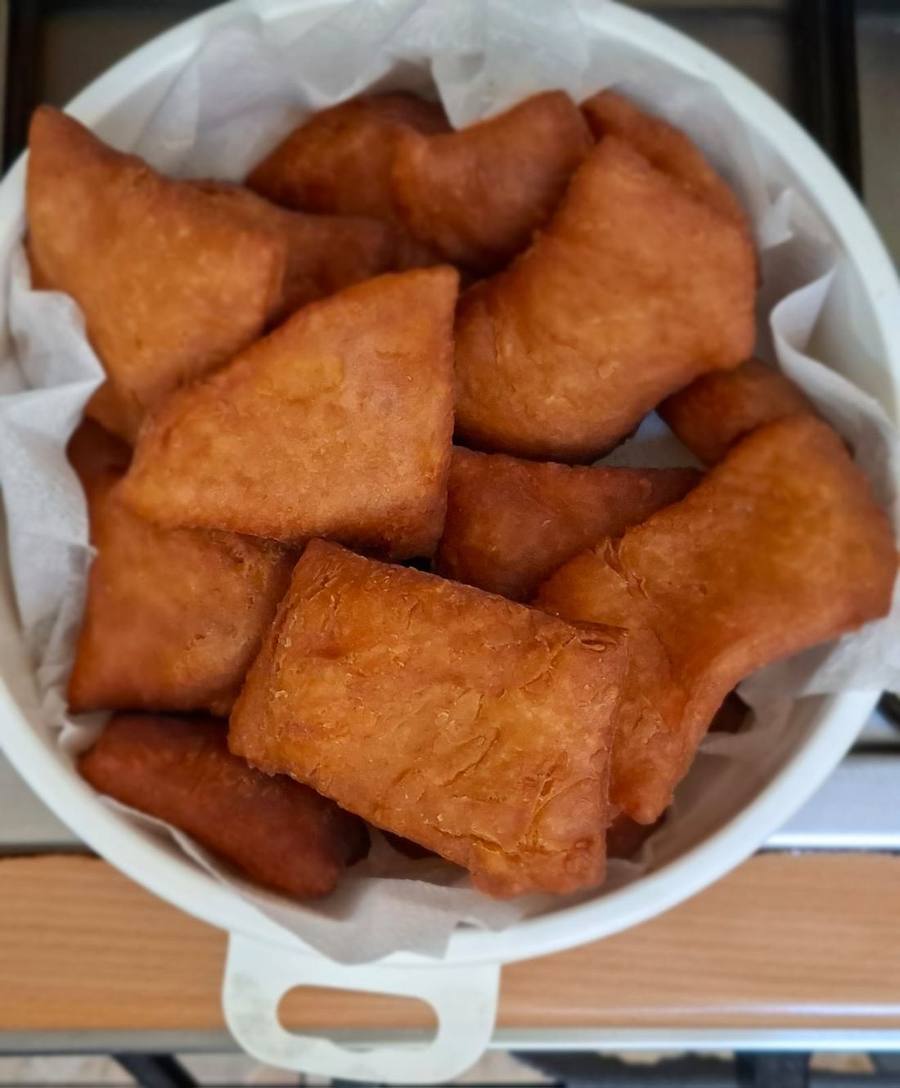
Mandazi is an East African fried dough — lightly sweet, usually cut into triangles, and eaten warm with tea rather than as a dessert. Think of it as a plain fried bread with just enough sugar to notice. In Budapest, Nyumbani Vibes Foods fries mandazi to order in District VII, and they travel well across all 23 districts.
What is mandazi made of?
Wheat flour, sugar, a little fat, and milk or water, brought together into a soft dough with baking powder or yeast to lift it. Many cooks add cardamom, and some add a splash of coconut milk. The dough is rested, rolled out flat, cut into triangles or squares, and deep-fried until it puffs and turns gold.
What it does not have is icing, filling, glaze, or the heavy sweetness of a bakery doughnut. Mandazi is a quiet food. A plain one eaten warm tastes of fried wheat, faint sugar and, if the cook used it, a whisper of cardamom.
Mandazi and mahamri — not quite the same
The coastal cousin of mandazi is mahamri, made with coconut milk and yeast and scented with cardamom, which makes it lighter and noticeably more perfumed. The two words get used loosely, and plenty of Kenyan families use them interchangeably at home. We untangle it properly in Mahamri or Mandazi: What Is the Difference?.
How mandazi is eaten in Kenya
With tea, almost always. The pairing is fixed enough to be a habit rather than a choice:
- Morning — two or three mandazi with hot milky chai before work or school.
- Guest arrives — mandazi and tea appear on the table within minutes. Turning them down is harder than accepting.
- Afternoon — a kiosk snack bought hot, wrapped in paper, eaten on the walk.
- With beans — savoury mandazi, dipped into a bowl of beans in coconut milk. Sweeter than you'd expect it to work, and it works.
The tea it goes with is usually chai ya tangawizi, boiled with milk and fresh ginger, strong enough to stand up to the fried dough.
Mandazi for a Hungarian sweet tooth
Budapest readers will reach for the comparison with fánk, and it is a fair starting point: both are fried dough, both are best the day they are made. The difference is sugar. Mandazi carries a fraction of the sweetness, no jam, no dusting of icing sugar, and a firmer, breadier crumb. Someone expecting dessert will find it plain. Someone expecting bread will find it a treat.
They also make excellent party food. A tray of mandazi holds up on a table for hours, they are easy to eat standing up with a drink in the other hand, and they suit a mixed crowd — no cutlery, no plates, nothing complicated to explain.
Ordering mandazi in Budapest
Mandazi are at their best warm, and honestly second-best cold, so we fry them close to the time they go out. Nyumbani Vibes Foods is a Kenyan home kitchen at Erzsébet krt. 19 in District VII, a couple of minutes from Blaha Lujza tér and directly on the 4–6 tram line. Delivery covers all 23 districts of Budapest, Buda and Pest. We need a day's notice for food, and prices are quoted per order in forint — send your list and you get the total the same day.
On allergies, the honest answer: this is a home kitchen where wheat, dairy, eggs and coconut are in daily use, so a trace-free plate cannot be promised. Tell us the allergy before ordering and you get a straight answer about what we can and cannot do.
Frequently asked questions
What is mandazi?
Mandazi is an East African fried dough, lightly sweet and usually cut into triangles. It is made with wheat flour, sugar, a little fat and milk or water, then deep-fried until golden and eaten warm with tea.
Is mandazi the same as a doughnut?
Not quite. Mandazi is much less sweet than a glazed doughnut, has no filling and no icing, and is usually triangular rather than round. It sits closer to a plain fried bread than to a dessert.
When do Kenyans eat mandazi?
Mandazi is a breakfast and tea-time food. It is eaten in the morning with chai, offered to guests in the afternoon, packed into school lunches, and sold from kiosks and street stalls all day.
Order from Nyumbani Vibes Foods
We fry mandazi and mahamri to order, by the bag or by the tray for a party. Nyumbani Vibes Foods is open Sunday to Friday and closed all day Saturday for the Sabbath. Delivery reaches all 23 districts of Budapest, or collect at Erzsébet krt. 19 in District VII. Message WhatsApp +36 30 218 0887 or on Instagram at @nyumbani_vibeskehub25.
Order this from Nyumbani Vibes Foods
Kenyan home cooking and hand-iced cakes, made to order in District VII and delivered to all 23 districts of Budapest. Open Sunday to Friday, closed Saturday for the Sabbath.
Keep reading
 Catering & events
An African Table for Christmas in Budapest
Christmas catering in Budapest does not have to mean the same December menu as everyone else.…
Catering & eventsFeeding a Church Event Without Losing Your Sunday
Church event catering in Budapest comes down to three decisions: dishes that survive two hours…
Catering & eventsHow to Feed a Church Event Without Cooking All Night
Church event catering in Budapest works best when you order the slow-cooked things and keep…